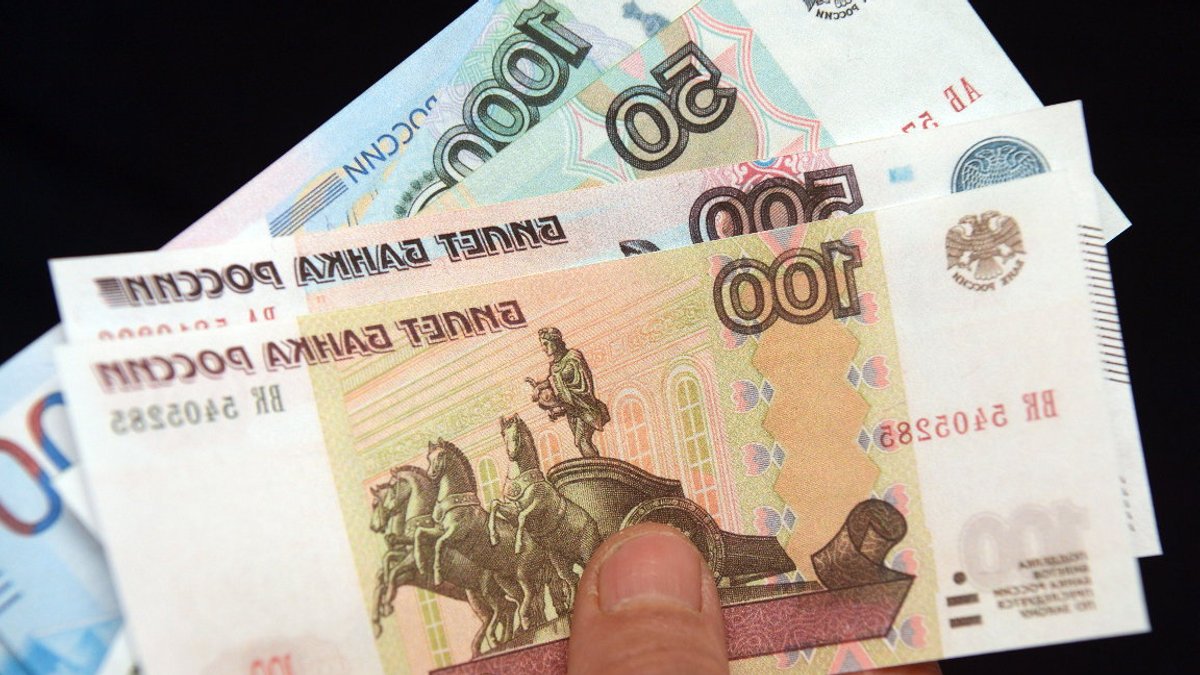
Russia is using a mechanism of disguised monetary creation to finance its military campaign in Ukraine. The country’s state-controlled banks are absorbing public debt using liquidity from the central bank, bypassing private investors who are reluctant to lend.
This hidden cycle of money creation risks leading to runaway inflation and economic instability. To support its vast military campaign in Ukraine, the Russian government is resorting to a secret method of monetary creation.
Military Spending and Budget Deficit
The Ukrainian Foreign Intelligence Service’s data reveals that Russia’s budget deficit has risen to nearly $77 billion in the first six months of 2026. To cover these growing costs, which could exceed initial forecasts by at least $64.1 billion and bring the annual deficit to $105.1 billion, the Ministry of Finance has issued two new floating-rate bonds worth a total of $19.2 billion.
These bonds have maturities extending until 2042. The state-controlled banks are being forced to purchase these bonds using liquidity provided by the central bank.
State-Controlled Banks and Monetary Creation
Despite several unsuccessful auctions in mid-summer due to a lack of market interest, these banks have significantly expanded their portfolios of government bonds, which reached around $248.1 billion in July. This amount represents about 10 percent of the total assets held by the banking sector.
The Ukrainian intelligence services describe this process as a disguised system of money creation. By forcing state-owned financial entities to absorb public debt rather than resorting to borrowing on the free market, the Kremlin can obtain immediate funding for the military.
Related: Russia auctions state diamonds to fund war
However, this cycle – in which the Ministry of Finance issues debt, state banks buy it, and the central bank provides the necessary funds – effectively turns public debt into an indirect tool of monetary creation, increasing the risk of inflation and reinforcing economic instability.
Consequences of Disguised Monetary Creation
The reliance on state-imposed lending is due to the reluctance of private investors to grant loans in the current context of high interest rates. By relying on internal banking mechanisms, the Russian government is masking the true extent of its budget deficit.
Experts warn that this dependence on central bank financing, rather than transparent market operations, poses a danger to the national banking system. The scale of these military expenditures is colossal, with Russia allocating $146.4 billion to defense in the first three quarters of 2025 – four times more than in 2021.
This represents 39 percent of the state’s total expenditures. To manage the resulting deficit of $69.8 billion during this period, the Kremlin ordered state banks to absorb $87 billion of federal bonds guaranteed by the central bank.
It will be important to monitor the effects of these policies on the Russian economy and the global financial services sector.




Leave a Reply