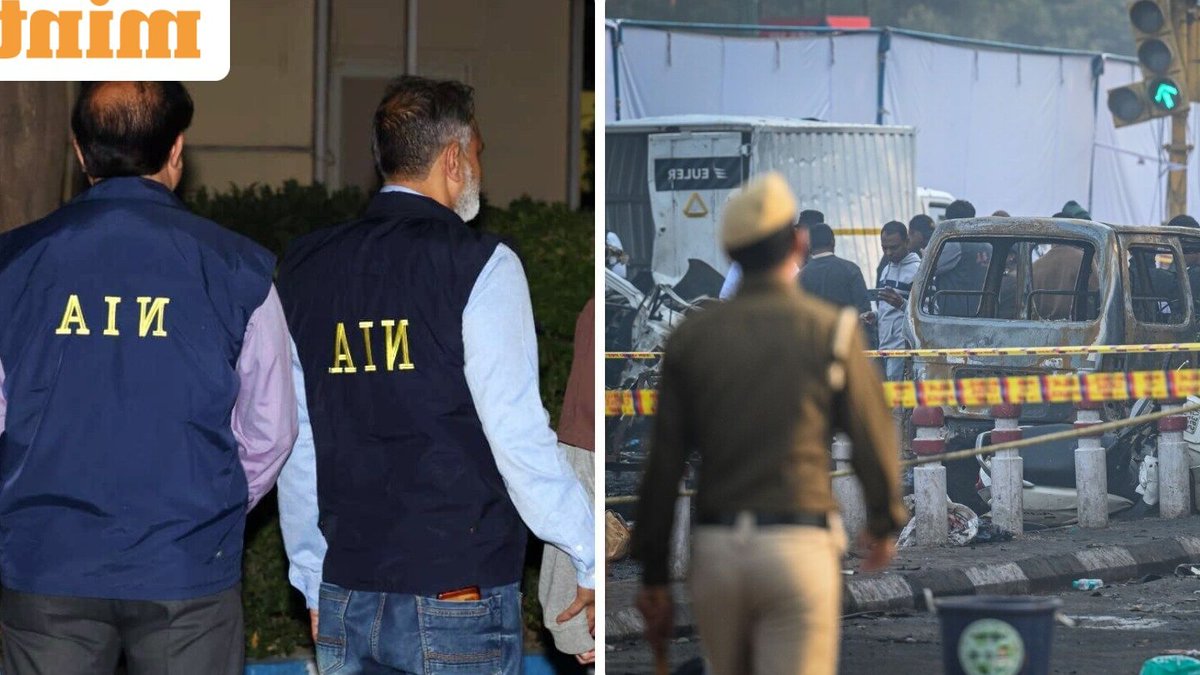
The National Investigation Agency (NIA) has linked the 2025 Red Fort car blast—which killed 11 people and injured 29 others—to a network that distributed extremist literature, including a manual titled How to Become an Assassin and 44 Ways to Support Jihad. The attack, which struck near the historic monument on November 10, 2025, at approximately 6:50 pm, was allegedly orchestrated by a revived Ansar Ghazwat-ul-Hind (AGuH) module associated with the ideology of Al-Qaida in the Indian Sub-continent. The blast caused extensive damage to surrounding property and vehicles.
The Manuals Used in the Attack
The NIA’s chargesheet reveals that the accused relied on the Lone Mujahid Pocket Book/How to Become an Assassin, a document linked to Al-Qaida in the Arabian Peninsula (AQAP). The manual provided step-by-step guidance on explosives—including TATP and remote-controlled detonation—as well as techniques for covert movement, surveillance, concealment, and escape. Forensic evidence confirmed the use of TATP and ammonium nitrate in the blast, matching the manual’s instructions. The document also included detailed instructions on constructing improvised explosive devices (IEDs) and methods for evading detection during operations. These techniques were reportedly used to plan the Red Fort attack, including the selection of the vehicle and the timing of the detonation.
Other recovered materials included titles like Definition of Jihad, 39 Ways to Serve and Participate in Jihad, and The 21 Aims and Objectives of Jihad. The documents, according to the NIA, were used to justify armed violence and recruit new members. The chargesheet states that the literature was part of a broader conspiracy to radicalize individuals and plan attacks. The chargesheet refers to a number of documents and publications allegedly recovered during the investigation. These included documents titled The Requirements of Jihad and 44 Ways to Support Jihad, which promoted extremist ideology and contained material relating to terrorist operations.
Read Also: Keltie Knight Gives Behind-Scenes Look Before Emmys
Investigators allege that the extremist materials were shared through encrypted messaging platforms, including Signal, allowing the group to coordinate without detection. The NIA claims the accused also arranged finances, procured illegal weapons, and scouted locations for operations, with communications conducted in a manner designed to evade law enforcement monitoring.
The Mastermind and the Group’s Revival
The NIA identifies Umer Un Nabi, also known as Pinda or Rahul Bhat, as the alleged mastermind of the attack. Nabi, who was inside the vehicle when it exploded, was described as the “operational in-charge” of AGuH Interim, described by investigators as a revived manifestation of Ansar Ghazwat-ul-Hind associated with the ideology of Al-Qaida in the Indian Sub-continent. The group, dormant since earlier years, was allegedly reactivated in early 2022 to carry out attacks in Jammu and Kashmir and Delhi-NCR. The NIA’s investigation suggests that Nabi played a central role in reviving the module, organizing its activities, and overseeing preparations for multiple planned operations.
Nabi’s role included radicalizing recruits and promoting Shahadat (martyrdom) through extremist propaganda. The chargesheet refers to a number of documents and publications allegedly recovered during the investigation. They promoted extremist ideology and contained material relating to terrorist operations. Nabi allegedly used extremist propaganda to influence and recruit other persons into the group. The NIA also referred to Nabi’s alleged plan to travel to Afghanistan for “Hijrat”.
Read Also: 56‑Year‑Old Struggles to Secure Entry‑Level Interviews
His death in the blast means charges against him have been dropped, but the NIA’s findings detail his alleged leadership in the conspiracy, including the use of propaganda to influence and recruit others into the group. The chargesheet also references Nabi’s involvement in clandestine meetings held in both Jammu and Kashmir and Delhi-NCR as part of the conspiracy’s planning phase.
The NIA alleged that the Red Fort blast was the outcome of a wider conspiracy involving the revival of the AGuH module, radicalization of recruits, circulation of extremist literature, and preparations for carrying out terrorist attacks.
Forensic Evidence and the Blast Mechanism
Forensic analysis of the blast site confirmed that the car was rigged as a Vehicle-Borne Improvised Explosive Device (VBIED), with explosives detonated remotely from inside the vehicle. DNA evidence recovered from the scene matched Nabi’s identity, while post-blast debris contained traces of TATP and ammonium nitrate, consistent with the manual’s instructions. The NIA’s chargesheet states that the device was triggered through a command mechanism, likely controlled by Nabi before the explosion. Vehicle debris and other recovered materials further supported the conclusion that the vehicle had been converted into a VBIED, with forensic examinations revealing explosive residues that aligned with the manual’s guidance.



Leave a Reply