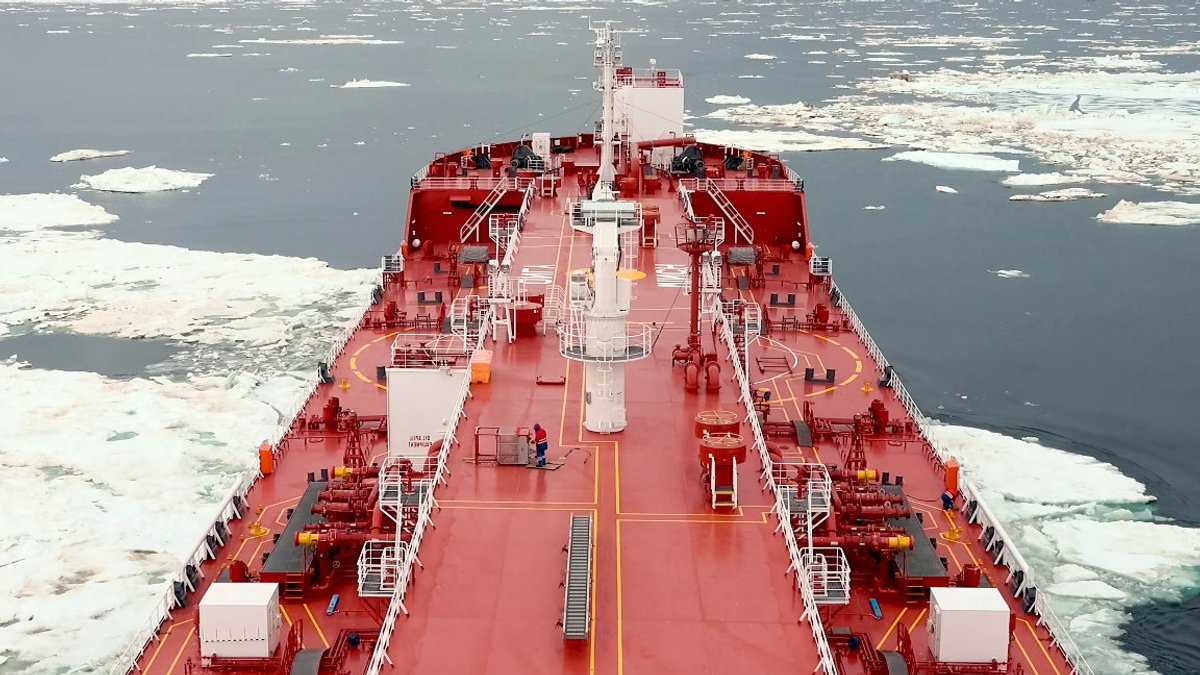
Russia is routing an increasing share of its crude oil to Asian markets via the Northern Sea Route (NSR), a shift that reflects both logistical challenges and geopolitical pressures.
Arctic shipping gains momentum as traditional lanes grow riskier
Recent data show that roughly 8 million barrels of crude are either in transit or ready for shipment along the Arctic corridor. That volume accounts for about 60 percent of the total oil moved through the NSR during the summer‑autumn window, indicating a marked pivot from conventional routes.
About 15 tankers operate in the Kara Sea or traverse the NSR, while additional vessels head northward through the Barents and Norwegian seas. To move through ice‑laden waters, Russia has deployed three nuclear‑propelled icebreakers. The fleet remains limited by a shortage of specialized ice‑class ships capable of independent operation.
The navigation window, from late June to early November, offers the most favorable conditions. Yet the scarcity of suitable vessels forces reliance on a small fleet, making the expansion of Arctic traffic a strategic gamble.
Sanctions, drone strikes and the scramble for alternative flags
Western sanctions and a series of Ukrainian drone attacks have intensified the search for ways to conceal oil shipments. The Kremlin’s network of “flags of convenience” relies on registries in African nations such as Gabon and Sierra Leone, often routing ownership through intermediaries in Turkey and the United Arab Emirates.
Ukrainian drones have repeatedly targeted Russian energy infrastructure, striking both refineries and port facilities. In July alone, 18 refineries were hit, including the large Omsk complex, and roughly 30 attacks were recorded against oil‑related sites. This pressure has contributed to a sharp decline in domestic refining capacity.
Related: HSBC to Buy Back One Billion Dollars
National crude processing fell to a low of 3.6 million barrels per day in July, the smallest figure since 2002 and roughly a third below typical seasonal levels. The drop reflects the combined effect of drone‑induced damage and the limited ability to reroute oil through alternative pipelines or storage hubs.
Even as attempts are made to divert Black Sea oil to Baltic ports, analysts note that limited pipeline capacity and storage infrastructure cannot fully offset the disruptions. Moreover, the reach of Ukrainian drones into Baltic ports suggests that no maritime pathway is entirely secure.
Reliance on Arctic routes may expose exports to heightened environmental risks and operational uncertainties as climate patterns shift. The need for more ice‑class vessels and the potential for further sanctions could constrain the expansion of this corridor.
In the short term, increased Arctic traffic is likely to keep oil flowing to Asian buyers.
Long‑term sustainability of the strategy remains uncertain.




Leave a Reply