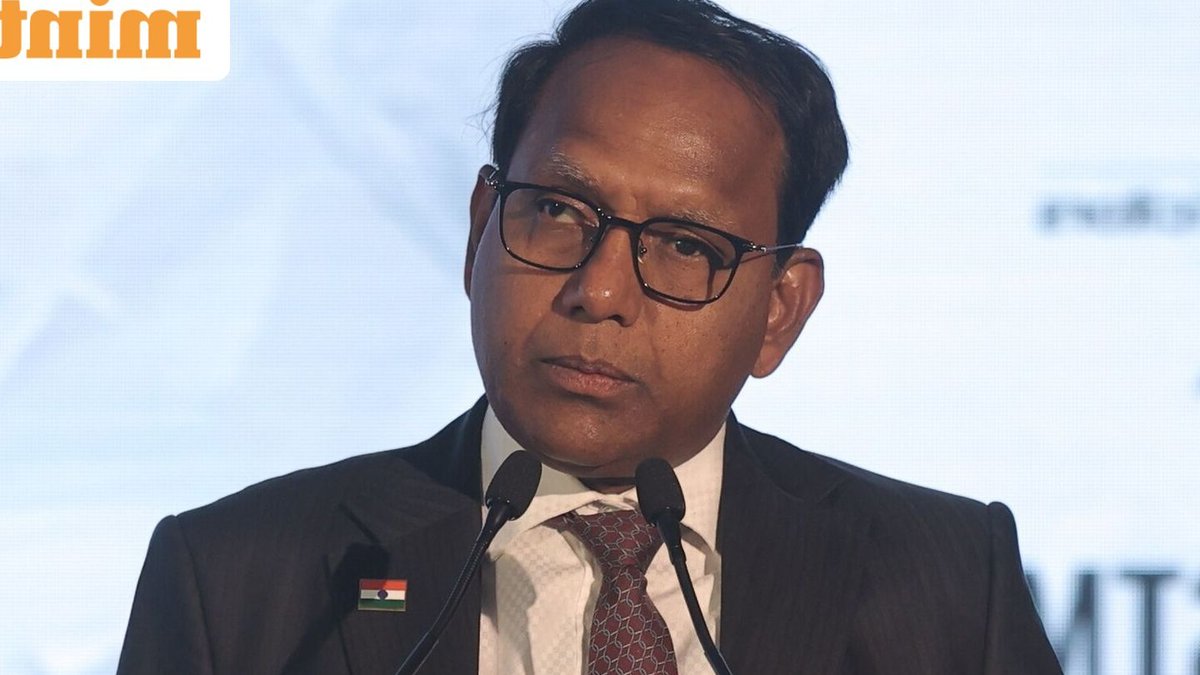
Former Department of Financial Services (DFS) secretary M. Nagaraju states that the Indian government’s plan to impose a merchant discount rate (MDR) on Unified Payments Interface (UPI) transactions stems from the surge in transaction volume and the widening disparity between system costs and government subsidies.
Starting October 15, UPI will adopt a fresh pricing model. This framework levies a 0.4% MDR on specific person-to-merchant transactions exceeding ₹2,000, though this fee is limited to a maximum of ₹300. Conversely, peer-to-peer transfers and eligible small merchants are exempt from these charges.
Background to the Decision
Nagaraju clarified that while the situation was not a sudden emergency, it was a recognized sustainability issue formally raised with authorities. Industry groups, such as the Payments Council of India, had long expressed worries regarding the viability of the zero-MDR approach, and these concerns were evaluated alongside the system’s operational costs.
In August 2026, UPI handled 24.51 billion transactions valued at ₹29.82 trillion, marking a 22% rise in volume compared to the previous year. The Parliamentary Standing Committee on Finance referenced an industry estimate of approximately ₹207 billion as the annual cost of running the UPI ecosystem. Meanwhile, the government’s 2026-27 budget allocation for RuPay and low-value UPI incentives is ₹2,000 crore, which only covers about 11% of those costs.
The government decided to review the zero-MDR policy to establish a sustainable revenue model. This model aims to safeguard small merchants and P2P transfers while generating funds from larger-value merchant payments. Government incentives were intended as temporary bridge funding to encourage early adoption, not as a permanent revenue source.
Impact on Banks and Merchants
Banks were incurring costs on merchant verification, QR deployment and support without receiving any return from larger merchants under the zero-merchant discount rate (MDR) regime, according to Nagaraju. The primary worry was the direction of costs, not an immediate breakdown. The ecosystem supporting UPI needs continuous investment in capacity and security. Merchant onboarding in smaller towns also carries costs for banks, since each merchant requires verification, QR deployment and support, and zero MDR provided no return on that effort for larger merchants.
The ₹2,000 threshold mirrors the limit used in the government’s low-value UPI incentive scheme, which subsidizes small-merchant payments up to that amount. Transactions under ₹2,000 constitute over 95% of person-to-merchant volume, ensuring that routine expenses like groceries, local transit, and small retail purchases stay free.
Read Also: Kapil Sibal proposes ban on party defectors
Essential and low-margin industries, such as rail travel, telecommunications, insurance, fuel, and utilities, must pay a flat ₹5 per transaction above ₹2,000. These sectors represent roughly 17% of transaction volume but account for about 46% of the total value. Consequently, applying a percentage rate here would place a heavy burden on essential services.
The rate and other parameters were determined by the UPI and Services Steering Committee, chaired by the National Payments Corporation of India (NPCI). This body includes banks, payment firms, and industry associations like the Payments Council of India and the Indian Banks’ Association.
The charge is capped at ₹300, which begins at ₹75,000, the point where 0.4% equals that limit. The operational details were finalized by the steering committee following consultations with the government and the Reserve Bank of India (RBI).
Nagaraju noted that the zero-MDR policy introduced in January 2020 was intended to boost digital payment adoption and has succeeded in that goal. Government incentives during this period were viewed as short-term bridge funding.
Payments up to ₹2,000 for merchants remain free, and small merchants in the P2PM category are also exempt. Payment applications are prohibited from charging consumers a platform fee, and there are no monthly restrictions on free usage.
Nagaraju stressed that merchants registered for UPI cannot pass the MDR on to customers, and payment apps cannot levy platform fees or other charges on UPI transactions. Customers should pay the price listed on the item.
For major merchants and e-commerce platforms, the 0.4% fee, capped at ₹300, is lower than the cost of accepting credit cards. Accepting payments is a standard business expense, often offset by increased customer traffic and reduced cash-handling costs.





Leave a Reply