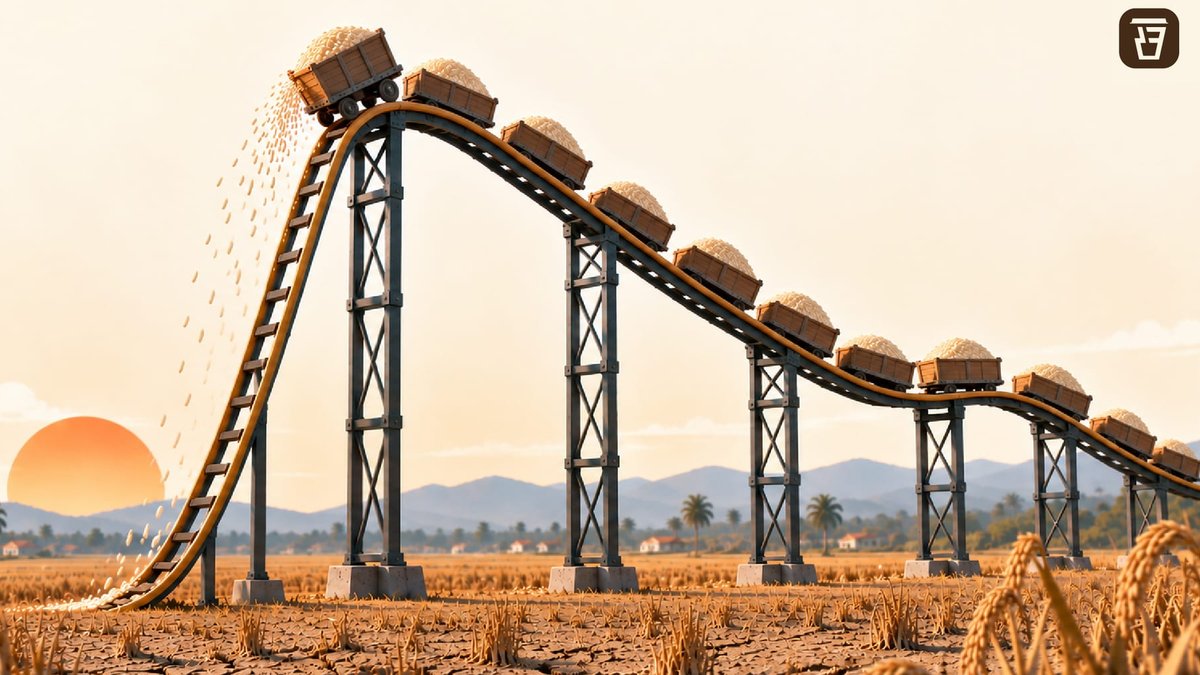
Rice production in India could fall by about 6.5%, or 10 million tonnes, from last year to around 144 million tonnes, making it the biggest drop in output since 2009-10. That year, a rainfall deficit and droughts across a third of the country cut output by 15-18%. While the current decline appears smaller than in 2009, it signals a return to the pattern of crop failure driven by weather conditions that have become increasingly difficult to predict.
Rainfall Shortages and Sowing Delays
As of mid-September, India had received 15% less rainfall than normal since the monsoon began. The deficit was as high as 42% in major rice-growing states such as Uttar Pradesh and Jharkhand. This shortfall delayed the sowing of Kharif rice, the summer crop that accounts for most of the annual production, and ultimately reduced the area planted with rice.
El Niño conditions have been identified as a contributing factor, as they tend to weaken the monsoon. The impact extends beyond rice; reservoirs holding monsoon water for winter crops are also below normal levels. This creates a risk that the production issues will not be limited to the summer season but could spill into the winter sowing period as well.
Food inflation is already a concern. Non-basmati rice prices have risen by more than 10%. When combined with increases in sugar, onions, and cooking oil, the cost of staples is climbing. A decline in rice output threatens to push these prices higher, straining household budgets across the country.
Global Market Implications
India is the world’s largest rice producer, accounting for over a quarter of global output. The country has a history of using export restrictions to manage domestic supply. In 2023, India banned exports of non-basmati rice due to concerns over domestic availability, a move that was later reversed after the expected shortage did not materialize.
When exports resumed, the return of Indian shipments helped push global rice prices down by roughly 35% from the previous year. This occurred alongside strong harvests in other Asian countries. However, a decline in Indian output risks reversing this trend. Higher domestic prices would make Indian rice less competitive just as competitors such as Thailand and Vietnam are also facing price increases.
Government reserves offer some buffer. The Food Corporation of India (FCI) holds around 60 million tonnes of rice, purchased from farmers at a Minimum Support Price (MSP) regardless of market conditions. This stockpile is roughly 5-6 times the amount the government normally aims to maintain. On paper, this should provide enough supply to stabilize prices and support exports.
However, the composition of these reserves complicates the situation. A large portion of the stock is unmilled paddy, which requires processing before it can be consumed or exported. Additionally, significant quantities are allocated to the public distribution system and ethanol production for fuel blending. The types of rice held—ranging from basmati to broken varieties—may not align perfectly with what the market needs during a shortage.
India’s public stockholding system is designed to ensure food security, but it operates within strict limits. Traders cannot access the full stock, and the varieties available may not meet the specific demands of domestic consumers or international buyers. This mismatch means that even a large reserve does not guarantee immediate relief in the market.
Feed Costs and Policy Options
Broken rice, or the small fragments left behind after milling, is an important input for poultry feed. A shortage or price rise in this specific variety would force farmers to pay more for feed. The higher costs would then ripple through the market, increasing the prices of eggs, chicken, and dairy products.
The government has two primary tools to address this situation. The Open Market Sale Scheme allows the release of rice into the market for wholesalers and retailers. However, this requires releasing stock in large quantities. The available varieties in government reserves may not match market demands. Small releases of the wrong types would likely fail to lower prices effectively.



Leave a Reply