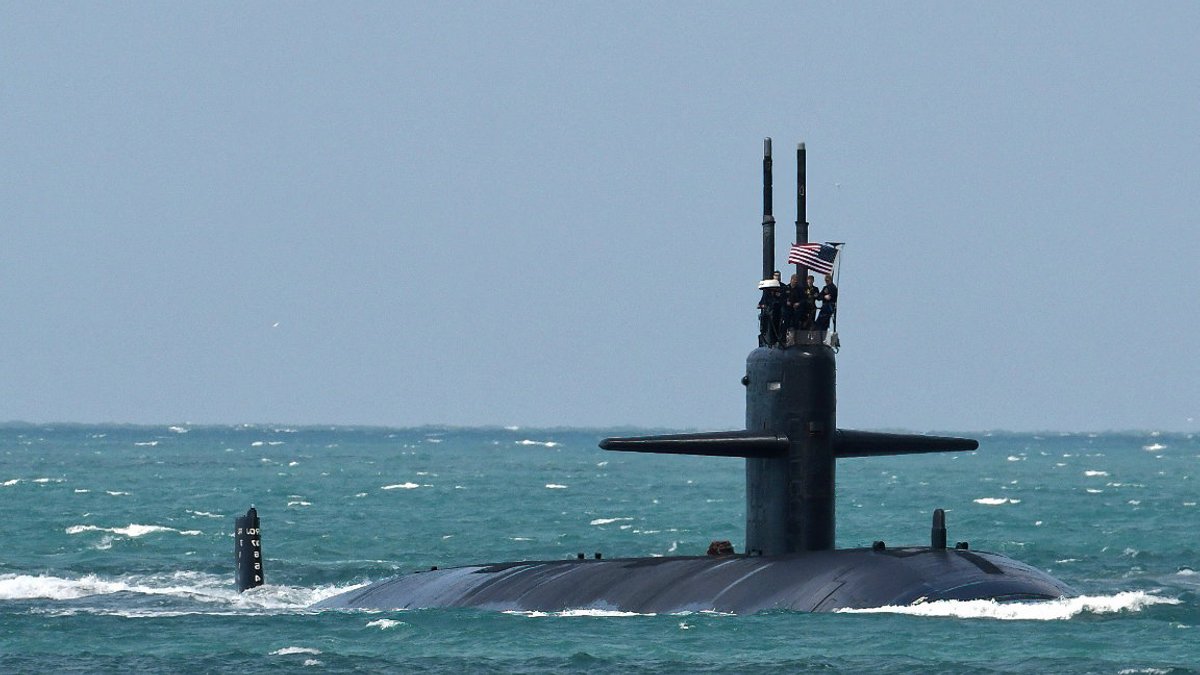
The retirement of the USS San Juan from service marks more than the end of a single submarine, as it highlights a vulnerability that could impact the US nuclear attack submarine force for years to come.
The reduction of the SSN fleet forces Washington to make difficult choices at a time when strategic pressure is intensifying in both the Atlantic and the Pacific.
America’s Nuclear Submarine Dream
The American dream of a new generation of nuclear attack submarines is being put to the test, as the industrial base is no longer able to keep up with the pace of geopolitical reality.
The USS San Juan was retired from service on August 6, 2026, after 38 years of service, marking the end of an era for a submarine that played a significant role in the US nuclear attack submarine force.
The San Juan was the first of the improved Los Angeles-class submarines and served as a link between the old US attack submarines and the current Virginia class.
A Place in the Fleet
The USS San Juan was commissioned in 1982 and entered service in 1988, featuring various improvements to make it more silent, versatile, and technologically advanced than its predecessors.
Related: Russian hackers target hotel Wi-Fi networks for corporate data theft
The submarine was equipped with an advanced combat system and sonar, representing a major technological leap forward in its class.
The San Juan’s operational history shows the range of its missions, including operations in the Atlantic, Mediterranean, Arctic, and Middle East.
From Cold War to Multi-Purpose Weapon
The San Juan was not designed solely to combat other submarines, as the role of US attack submarines has evolved significantly since the end of the Cold War.
Missions such as intelligence gathering, surveillance, anti-surface warfare, and land strikes have become increasingly important, and the San Juan illustrated this evolution, particularly through its use of Tomahawk cruise missiles during Operation Iraqi Freedom in 2003.
The submarine’s missile capability reflected this evolution, with the improved Los Angeles-class submarines featuring twelve vertical launch cells for Tomahawk missiles, in addition to four torpedo tubes.
This made the SSN a highly versatile platform, with a single nuclear-powered vessel able to be deployed for anti-submarine warfare, reconnaissance, surface attacks, and land strikes.
The US Navy faces not only a technical problem but also an industrial one, as the production of Virginia-class submarines is not progressing quickly enough to replace the retired Los Angeles-class submarines immediately.
Related: Russia Uses Hidden Money Creation to Fund War
Challenges Ahead
To stabilize the size of the SSN fleet, the Navy would need around two Virginia-class submarines per year, but the current production rate is lower than that.
They need the same industrial capacity to build the Columbia-class submarines, which are strategic submarines intended to replace the old Ohio-class submarines.
This problem is reminiscent of the broader challenges facing the US Navy, including the construction of surface ships, where the Congressional Budget Office warns that the US shipbuilding industry may struggle to keep up with the Navy’s ambitions.
The USS San Juan’s retirement comes at a symbolic moment, as the submarine began its career in the late Cold War era and ends its service at a time when the US is once again facing a strategic environment with multiple rivals.
It is clear that the San Juan’s technology has been largely surpassed, and the issue is no longer whether the US can design better submarines, but whether it can build them quickly enough.
The US submarine force is at a crossroads, and the retirement of the USS San Juan serves as a reminder of the challenges that lie ahead for the US Navy in maintaining its submarine capabilities.



Leave a Reply