
The Geopolitical Pivot: How Friend-Shoring is Restructuring Global Manufacturing Capacity
The End of Hyper-Globalization and the Search for Resilience
For decades, multinational corporations (MNCs) operated under the paradigm of hyper-globalization, optimizing supply chains solely for cost efficiency through strategies like “offshoring.” This drive led to the concentration of critical manufacturing capacity in a select few locations, often far from consumer markets. While this approach maximized profit margins, it simultaneously introduced systemic vulnerabilities.
The shocks of the last five years—including the COVID-19 pandemic, escalating U.S.-China trade tensions, and major geopolitical conflicts—have exposed the fragility inherent in this concentration model. The risk of sudden disruption, whether from pandemic lockdowns or state-level intervention, has necessitated a profound strategic realignment. The new mandate for MNCs is shifting from “just-in-time” inventory management to a “just-in-case” philosophy focused on stability and security. This monumental shift is driving the adoption of **friend-shoring** as the core strategy for **supply chain diversification** and the mitigation of **geopolitical risk**.
The Impetus for Manufacturing Restructuring
The strategic move away from single-source dependencies is not merely a reactive measure; it is a foundational change in how globalization is defined. The traditional model failed to adequately price in the non-market risks associated with concentrating production in countries whose foreign policies or institutional stability could suddenly jeopardize global operations.
The Limitations of Traditional Offshoring
Offshoring was premised on stability and predictable trade relations. When these assumptions dissolved, the business case crumbled, particularly for strategic goods like semiconductors, pharmaceuticals, and critical minerals. The core drivers compelling **manufacturing restructuring** include:
- **Geopolitical Friction:** Rising tensions between major economic powers introduce the severe threat of export controls, sanctions, and asset seizure, rendering high-risk areas unsuitable for **critical manufacturing capacity**.
- **Supply Chain Shocks:** The experience of 2020 demonstrated that localized health crises or natural disasters in major manufacturing hubs could instantaneously paralyze global production lines, emphasizing the need for robust **supply chain diversification**.
- **Policy Intervention:** Government mandates, such as the U.S. CHIPS Act or European critical supply chain legislation, are actively incentivizing or demanding that MNCs move key production into favored or allied nations.
Defining Friend-Shoring: Trust Over Pure Cost
While concepts like near-shoring (moving production closer to consumption) and reshoring (bringing production back to the home country) address geographical distance, friend-shoring adds a crucial dimension: political alignment and institutional trust. Friend-shoring involves intentionally shifting **critical manufacturing capacity** to countries deemed geopolitical allies or those that share similar values, regulatory frameworks, and security interests.
This approach transforms the calculation of cost. Instead of prioritizing the lowest possible labor expense, **MNC strategy** now incorporates a “Cost of Resilience,” accepting potentially higher operational expenses in exchange for higher institutional security and protection from state-level interference.
The Geopolitical Alignment Factor
Friend-shoring creates mutually dependent economic blocs. For example, a Western pharmaceutical company might move API (Active Pharmaceutical Ingredient) production out of a high-risk region and into a treaty ally—a nation with whom the home country shares extensive security cooperation and trade agreements. This fosters an environment where disruption to the supply chain is highly unlikely due to internal political strife or external coercion.
The countries benefiting from this trend are typically those within established Western alliances or stable emerging economies demonstrating strong governance and adherence to international intellectual property laws. Examples include Vietnam, India, Mexico (benefiting from near-shoring coupled with friend-shoring), Poland, and Morocco.
Read Also: What makes CenturyLink the best and allows it to stand out from everyone else?
Operational Challenges in Restructuring Global Footprints
The decision to shift production is strategically sound, but the execution of **manufacturing restructuring** presents immense logistical and financial hurdles for MNCs. Dismantling decades-old manufacturing ecosystems and rebuilding them elsewhere is a complex, long-term endeavor.
Investment in New Critical Manufacturing Capacity
The first major hurdle is capital expenditure. The cost to decommission, relocate, and certify new facilities runs into the billions, particularly for highly specialized sectors like automotive batteries or semiconductor fabrication plants (fabs). Furthermore, the new locations often lack the deep industrial support structures (Tier 2 and Tier 3 suppliers, specialized labor pool, logistics infrastructure) that were built up over decades in the original manufacturing hubs.
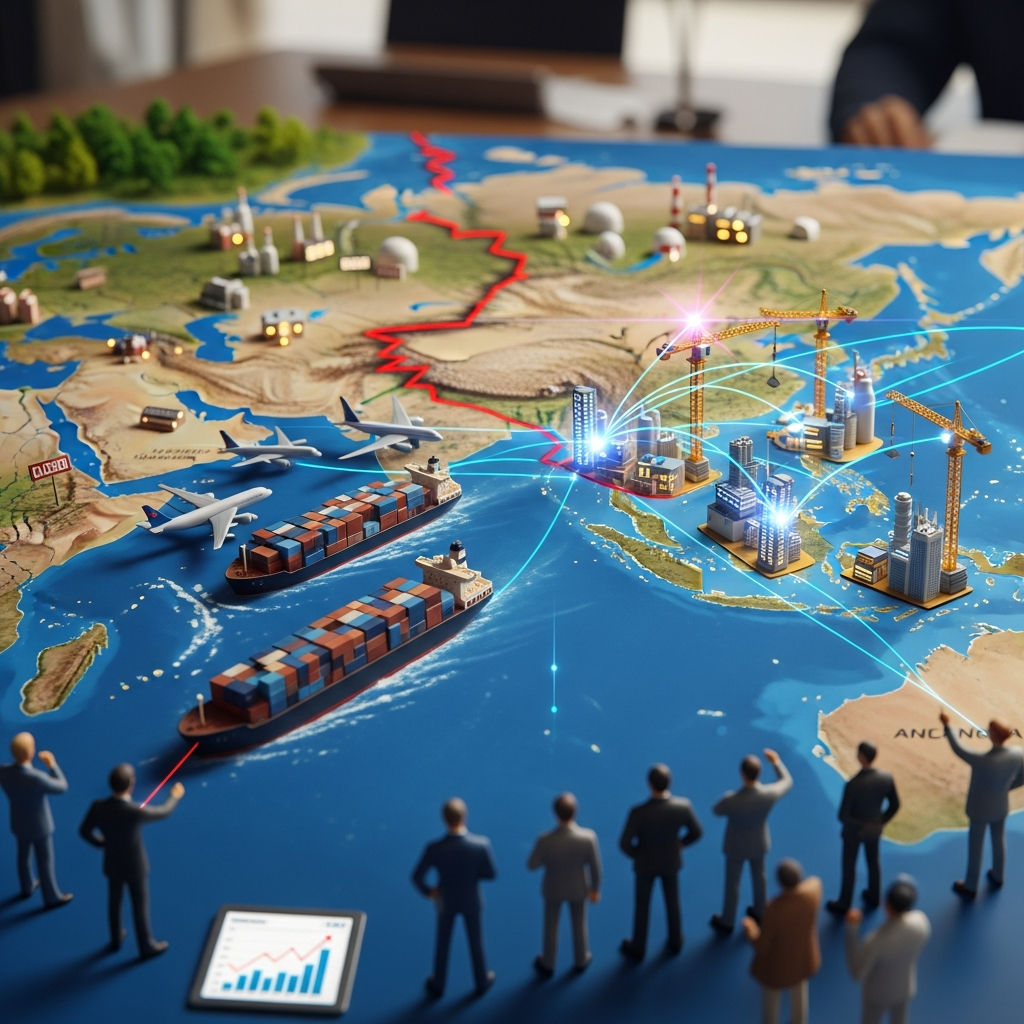
MNCs must address:
- **Infrastructure Development:** Requiring investments not just in the factory itself, but in local energy grids, ports, roads, and digital connectivity to support high-tech operations.
- **Talent Pipeline:** Establishing specialized training programs and often relocating key expatriate technical staff to ensure quality control in the new facilities.
- **Regulatory Synchronization:** Navigating disparate environmental, labor, and import/export regulations across new jurisdictions, which can slow down the deployment of **critical manufacturing capacity**.
Due to these challenges, the shift is often slow and phased, typically involving a “China Plus One” strategy, where the original manufacturing center remains operational while the MNC gradually builds redundant capacity in a trusted partner country.
The Strategic Implications of the Friend-Shoring Bloc
The long-term consequence of friend-shoring is the slow fragmentation of the global economy into distinct, politically aligned trading blocs. This shift fundamentally alters the landscape of global trade and competition.
Enhanced Economic Resilience
By creating redundant, geographically dispersed, and politically secure supply lines, MNCs significantly enhance their economic resilience. A localized crisis—be it political or natural—will no longer have the cascading effects that were observed during the height of the COVID-19 lockdown, ensuring continuity for vital goods.
While consumers may experience slightly higher prices (the cost of resilience passed down), the reliability of product availability and the security of strategic national interests (e.g., medical supplies, defense components) are vastly improved. Friend-shoring thus serves not only the bottom line of the corporation but the national security interests of the supporting government.
Future Outlook: A Permanent Shift
Friend-shoring is proving to be more than a temporary trend; it is a structural adjustment in response to enduring **geopolitical risk**. As governments continue to use industrial policy and investment incentives to attract key sectors, the move toward trusted partners will accelerate. MNCs that successfully navigate this complex **manufacturing restructuring** will emerge with more robust, less vulnerable global footprints, positioning them for success in an increasingly fractured and security-conscious global economy.
The restructuring required for effective **supply chain diversification** is a multi-year project, but it is undeniably the pathway toward sustainable, de-risked operations in the 21st century.
%20(3).svg "Business Strategy: 8 Key to Changing Market")