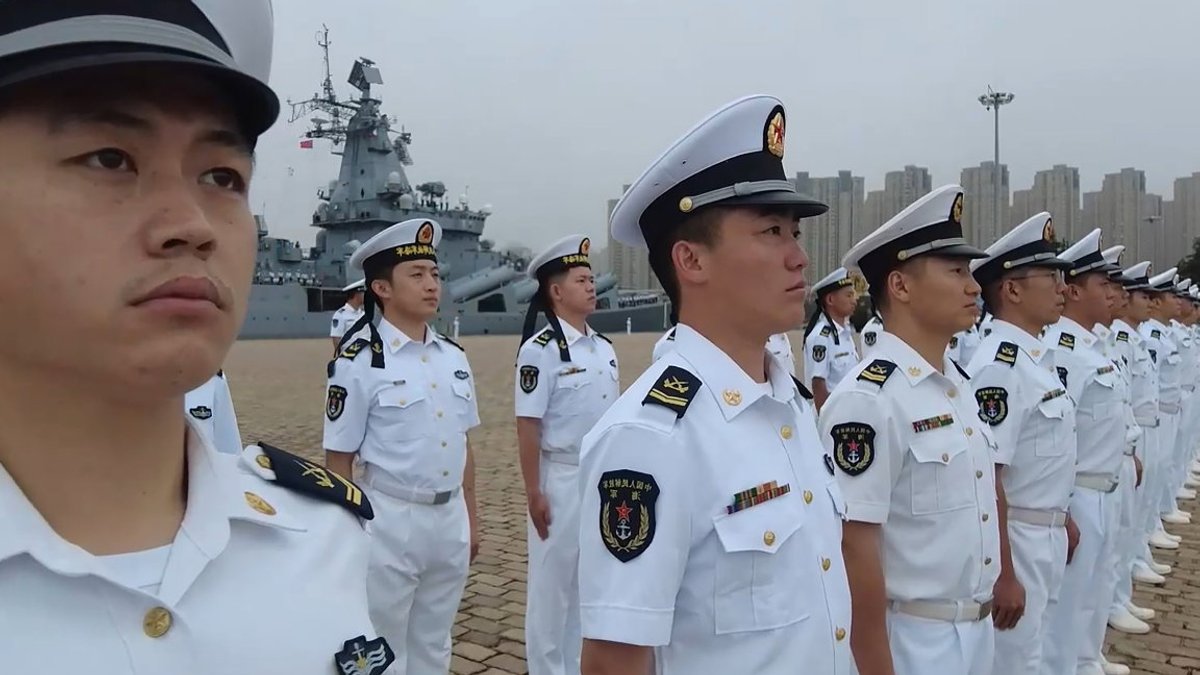
Russia’s military cooperation with China enables the Chinese navy to become a global naval power. The alliance allows Beijing to acquire technology that significantly enhances its naval capabilities. The partnership provides the funds Moscow needs to continue its war in Ukraine while simultaneously supplying Beijing with advanced military expertise.
Transfer of sensitive naval technology
Western governments are increasingly frustrated by China’s support for the Russian war effort. European officials have called for more aggressive countermeasures. According to a 2026 analysis by the European Council on Foreign Relations, Beijing has become essential to the Russian war machine. The report notes that China finances the conflict through expanded energy deals and exports dual-use components. This includes electric motors, fiber optic cables, and lithium-ion batteries sold via third-party platforms like Wildberries. Chinese entities also provide targeting data, intelligence, satellite imagery, and specialized materials.
Without this industrial and financial lifeline, Russia’s offensive in Ukraine would likely have collapsed long ago. This dynamic has created a stark power imbalance, relegating Moscow to a subordinate partner in an asymmetrical alliance where Beijing holds the primary leverage.
Related: US Prioritizes Lower Oil Prices in Iran Conflict
The cooperation began in the 1990s with Chinese companies illegally reverse-engineering Russian equipment, such as the Shenyang J-11B, a clone of the Sukhoi Su-27. While Russian defense officials were initially outraged by this intellectual property theft—Evgueni Livadny of Rostec mentioned hundreds of cases involving aircraft engines and air defense systems—Moscow’s desperate financial situation forced it to prioritize Chinese payments over national secrets. Over time, Russia has accepted these losses as a necessary cost of military cooperation. The current dynamic, however, involves a deeper and more dangerous transfer of critical defense secrets. In exchange for guaranteeing that President Putin can pursue the war indefinitely, Russia is now ceding its best-kept secrets. These are not simple copies of existing aircraft but fundamental technologies that will drastically improve China’s strategic nuclear warfare capabilities.
Security analysts note that while Western attention focuses on immediate supplies of oil and drones, the long-term danger lies in China developing sophisticated, highly destructive weapons systems. The most alarming development involves the People’s Liberation Army Navy (PLAN). Currently, China possesses a massive fleet, but only a small fraction is nuclear-powered, placing it behind the United States Navy. U.S. naval intelligence suggests that Russian expertise could allow China to expand its fleet to 80 submarines by 2035, with half of those being nuclear-powered. Iran’s Ghadir Submarine Fleet: How Many Remain
Building a nuclear submarine fleet
The new vessels will feature significant advances in weapons integration, reactor design, and stealth capabilities. The Russian transfer of knowledge regarding noise reduction, sensor efficiency, and reactor architecture is key for developing true superpower submarines. This technical exchange represents a fundamental shift in global naval trends. The reliance on Western components has made modern militaries vulnerable, and the Chinese acquisition of Russian nuclear submarine technology will likely render current Western naval strategies obsolete. The strategic implications are profound, as a larger, more capable nuclear submarine force significantly alters the balance of power in the world’s oceans. This shift creates a new era of naval competition where China is no longer just building numbers, but engineering quality that rivals the most advanced military forces on the planet.





Leave a Reply