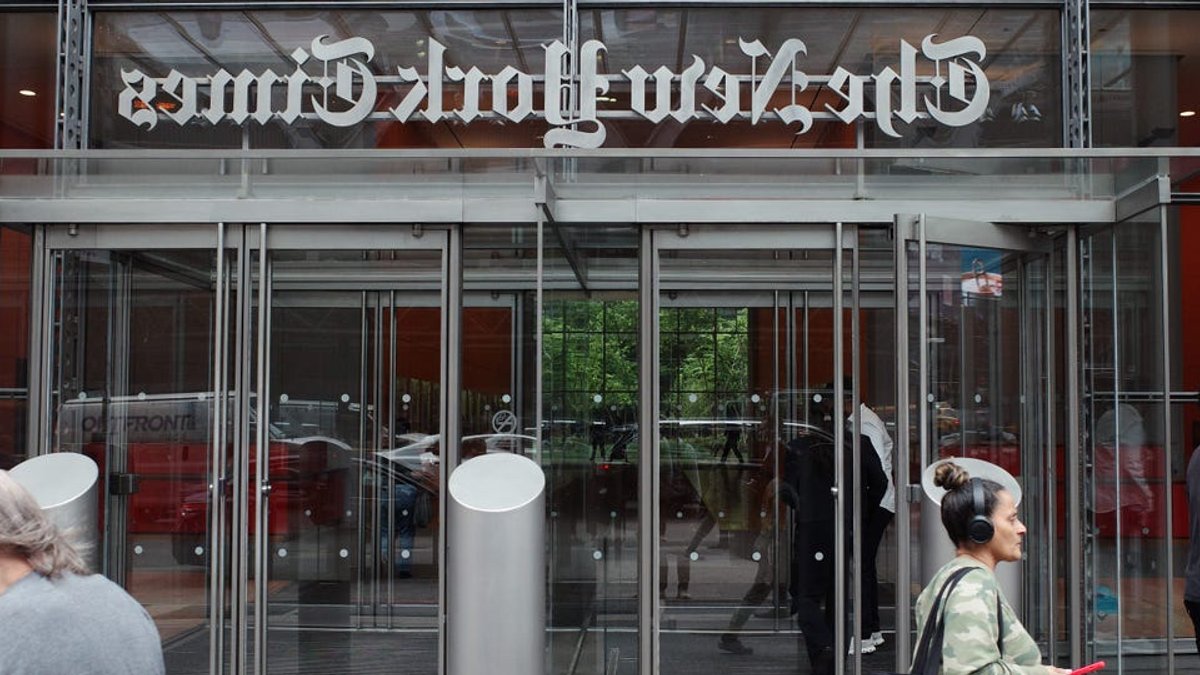
The New York Times on Wednesday asked a federal judge to block Justice Department subpoenas that demand five of its reporters testify before a grand jury about their recent story on security flaws in President Donald Trump’s new Air Force One plane. David McCraw, the paper’s top lawyer, called the subpoenas “abusive” and “improper” in a statement. “As we set out in our motion, these subpoenas are brought in bad faith to punish The Times for its coverage,” McCraw said. “They violate the constitutional rights of The Times and its journalists.”
The subpoenas were signed by Jay Clayton, the top federal prosecutor in Manhattan and Trump’s nominee for director of national intelligence. They require reporters Julian Barnes, Eric Lipton, Tyler Pager, Eric Schmitt, and Adam Goldman to testify before a grand jury. The paper published its investigation on security concerns with the new Air Force One the day before the subpoenas were issued.
What The New York Times’s investigation found
The modified Boeing 747-8 plane, which was donated by Qatar, lacks the same sophisticated antimissile defense capabilities as the older aircraft, the Times reported.
The subpoenas initially demanded the reporters appear Wednesday, though McCraw said he filed the motion to quash under seal due to a court order and is seeking to have those papers unsealed.
US District Judge Ronnie Abrams, who leads the Manhattan federal courthouse’s media access committee, is assigned to oversee grand jury issues this week.
Related: Credit Card Rewards Spark Travel Spending Disputes
The White House directed FBI Director Kash Patel to oversee the leak investigation into the Times’s reporting, according to the paper.
A spokesperson for Clayton’s office didn’t immediately respond to a request for comment.
Senators question Trump officials on subpoenas
The subpoenas became a subject during separate Capitol Hill hearings on Wednesday.
At Clayton’s confirmation hearing before the Senate Intelligence Committee, Sen. Ron Wyden, an Oregon Democrat, called the subpoenas a “flagrant attack” on journalists. Clayton told Wyden they were part of “an ongoing national security investigation.” He said he followed “the process that we were required to follow.”
“I operate by asking my team, ‘What do you think?'” Clayton said. “Any action in this regard, you can be assured, was a consultative exercise with the prosecutors in my office.”
Related: Inworld CEO cuts AI prices for consumer startups
Subpoenaing journalists over a story about a donated plane’s missing defenses punishes the messenger for reporting facts the administration did not want aired, rather than serving the public’s interest in security. At a separate hearing before the Senate Judiciary Committee, Sen. Peter Welch asked Todd Blanche, Trump’s pick for attorney general, if he supported Patel’s effort.
Blanche said the Justice Department viewed the journalists as “material witnesses, just like reporters would be witnesses to a car crash.”
“The question we want to ask them is who provided them with classified national security information, which everybody in this body should want to protect — I would hope,” Blanche said.
New York Times leadership pushes back
A spokesperson for The New York Times declined to comment on Blanche’s and Clayton’s remarks to the Senate committees.
In an email to the newsroom Saturday, the paper’s Executive Editor Joe Kahn called the subpoenas a “retaliatory abuse of prosecutorial power.” “This is a naked attempt to intimidate individual reporters and to prevent The Times and other independent news media from doing important reporting protected by the First Amendment,” he said. “We will mount a full defense of our staff, of course.”



Leave a Reply