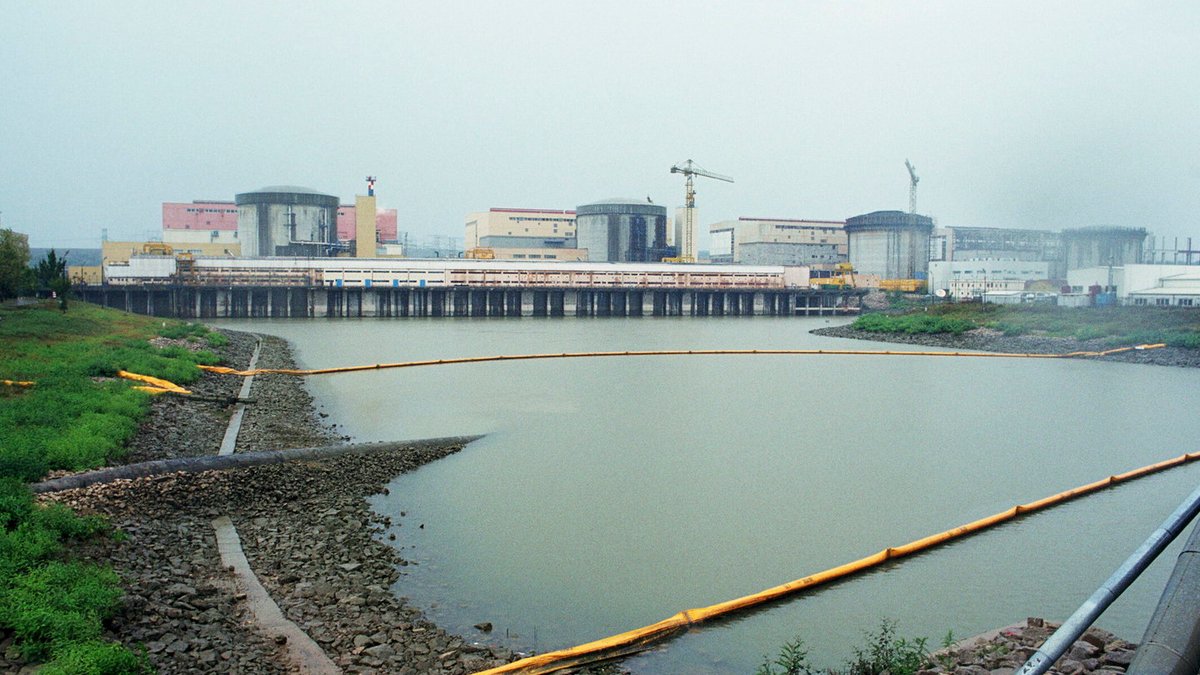
Romania’s only nuclear power plant has been completely shut down due to historically low water levels in the Danube River. The country is now importing electricity and relying on wind energy to avoid a general blackout.
The extreme drought has forced the authorities to take drastic measures, including controlled shutdowns of the plant’s reactors. Nuclearelectrica, the public energy company, shut down the second reactor of the Cernavoda plant, following the closure of the first reactor last month.
The Cernavoda plant normally covers around 20% of Romania’s electricity needs. To avoid a total blackout, the authorities spent over 2 million euros on emergency measures, including blasting rock formations and submerging barges loaded with stones to redirect the river’s current.
Despite these efforts, the water shortage became too severe to allow the plant to continue operating. This is the first time the plant has been completely shut down since a similar drought in 2003.
To maintain the national electricity grid, the Ministry of Energy plans to rely on electricity imports and wind energy. Officials have also urged the population to be mindful of their energy consumption during this period.
Environmental data highlights the severity of the crisis. According to the Copernicus climate observatory, nearly two-thirds of the Danube River recorded their lowest water levels in over three decades in July.
Scientists from the World Weather Attribution group suggest that these extreme heatwaves and lack of precipitation are exacerbated by human-induced climate change, and warn that such ecological disruptions are likely to increase.
The shutdown of the nuclear power plant has significant implications for the people of Romania, who will have to adapt to a new energy reality. As the country relies more on imports and alternative energy sources, it will be essential to ensure a stable and efficient energy supply to meet the needs of its citizens.
In the meantime, the authorities will continue to monitor the situation and take necessary measures to prevent a general blackout. The extreme drought has served as a wake-up call, highlighting the need for a more diversified and resilient energy system to mitigate the effects of climate change.
As the situation continues to evolve, one thing is clear: the impact of climate change on energy stability will only continue to grow, and it is essential for countries like Romania to be prepared to face these challenges head-on.
Nuclearelectrica is working to find solutions to the current energy crisis. They are exploring ways to maintain energy stability and ensure a steady supply of electricity to the population.





Leave a Reply