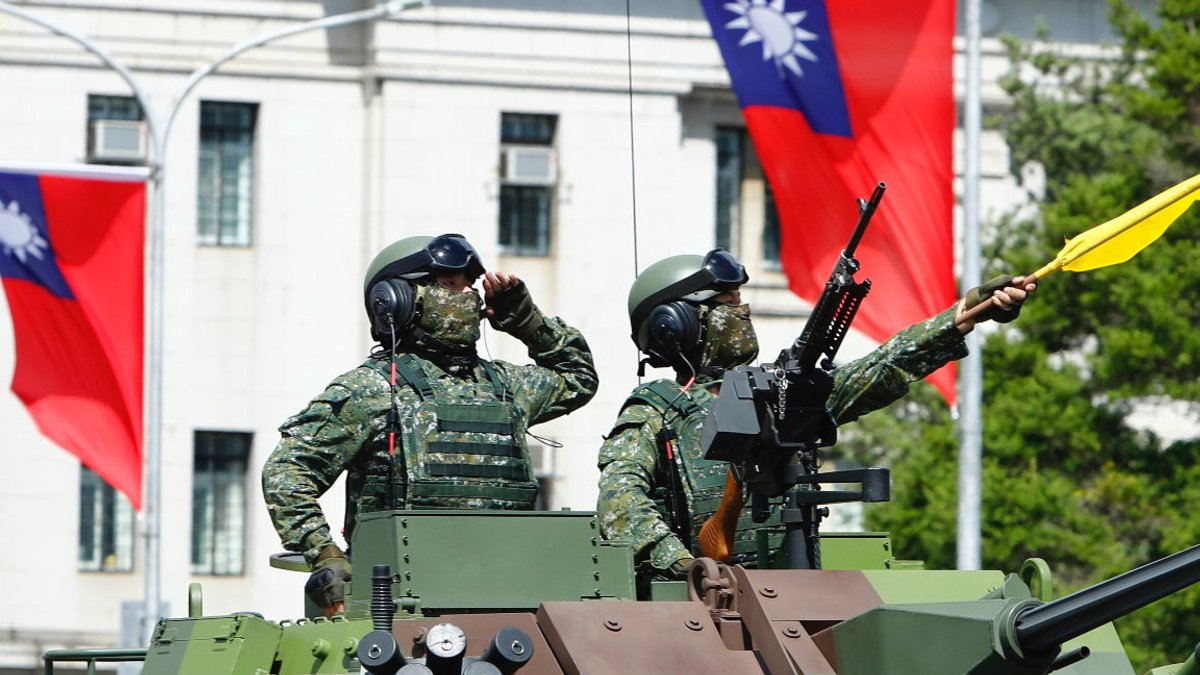
Taïwan is building a fleet of “Hellscape” drones to make any Chinese invasion too costly. The conflict in Ukraine has inspired a shift towards affordable and maneuverable unmanned systems.
Defense Strategy
The government wants to acquire more than 210,000 maritime and aerial drones. This strategy, called the “Hellscape model,” was developed with the advice of US military officials.
The goal is to create a defensive environment so lethal, with a barrage of missiles, artillery, and drones, that Beijing would judge an amphibious landing too expensive to attempt.
Military Transformation
Taïwan’s military transformation has been heavily influenced by the conflict in Ukraine. By adopting a “David vs. Goliath” tactic, Taipei plans to use affordable and maneuverable drones to neutralize the Chinese army’s numerical superiority.
According to Lieutenant General Huang Wen-chi, Taïwan’s strategic orientation has evolved rapidly over the past two years to catch up on drone and counter-drone capabilities.
They aim to produce 100,000 drone units per month by 2030. Military analysts suggest these tools could be used to strike Chinese ships while they are still in port, similar to the long-range attacks carried out by Ukraine in Russia.
Related: Turkey denies NATO defense pact conflict
Economic Impact
Taïwan is positioning itself as one of the world’s leading suppliers of drone components to help democratic nations reduce their dependence on Chinese equipment.
This shift is already visible in economic data. Drone exports in the first quarter of 2026 reached $115 million, exceeding the total for the previous year. While the Czech Republic is the main buyer, it is estimated that a significant portion of these systems is being rerouted to Ukraine.
Japan is following a similar path, analyzing Ukrainian combat data to develop low-cost interceptors for Iranian-style drones.
Tokyo has allocated around $1.7 billion in its 2026 budget to unmanned technologies, including the “SHIELD” initiative to protect its peripheral islands.
China’s Response
Meanwhile, China is advancing its own “swarm” technologies. Its Atlas system can coordinate 96 fixed-wing drones from a single vehicle, using AI to assign specific roles for reconnaissance, electronic warfare, and attack.
Experts note that such AI-driven waves could potentially bypass air defenses to strike at the heart of enemy territory without being detected.





Leave a Reply