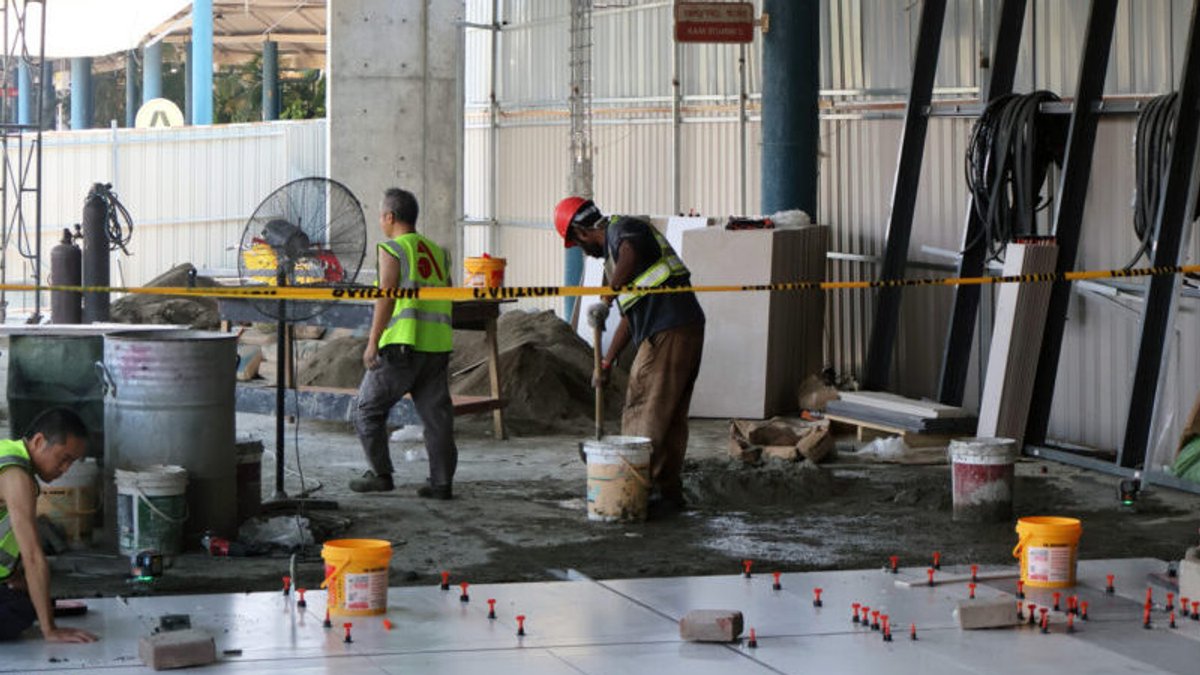
Port Moresby’s Jacksons International Airport is undergoing a multi-billion-kina redevelopment, its largest in nearly 30 years. The project, led by the National Airports Corporation (NAC), aims to address the strain on its domestic and international terminals caused by a surge in traffic. This redevelopment is key as the airport serves as the primary gateway to Papua New Guinea, connecting the geographically diverse nation.
Passenger numbers have more than doubled since 1997 to 1.68 million in 2025. They’re projected to reach 2.5 million by 2035 and 3.7 million by 2045. The redevelopment will unfold in four phases ahead of Papua New Guinea hosting APEC 2033. Each phase is designed to progressively enhance the airport’s capacity and efficiency, ensuring it meets future demands.
Addressing the Bottleneck
“When I took over as chair two years ago, we decided we couldn’t keep allowing the airport to be a bottleneck,” NAC Board Chairman Jacob Anga said. Both terminals were designed for far fewer passengers, and economic growth has fueled a boom in domestic travel. The strain is particularly evident during peak hours, when the current infrastructure struggles to manage the influx of travelers.
Further demand is expected as the Papua LNG and P’nyang gas projects move towards final investment decisions. These projects are anticipated to bring a significant increase in business and expatriate travel, further stressing the airport’s facilities. The first phase, a K24.7 million extension by AG Investments, will triple the domestic terminal’s capacity. It’s slated for completion by December, marking a significant milestone in the airport’s transformation.
Expanding Capacity and Upgrading Facilities
The current 1,000-person capacity often forces passengers to queue outside. “Now we [will be able to] move about 3,000 people in and out, which is huge for us,” Anga said. This expansion is critical to improving passenger flow and reducing wait times. Phase two will reconfigure the domestic terminal, adding at least 24 check-in counters, travelators, and a larger upstairs departure lounge, further enhancing the passenger experience.
Related Post: Nigeria Creates 750 Million Infrastructure Fund
Phase three will upgrade the area where aircraft are parked, loaded, refuelled, and boarded, and will add aerobridges for Air Niugini’s new fleet of 11 Airbus A220s. These upgrades will streamline operations and support the introduction of more efficient aircraft. Anga expects this phase to take about 12 months, ensuring minimal disruption to airport operations.
The final phase will deliver a new international terminal and lengthen the runway from 2,750 to 3,500 meters. This will enable the airport to handle larger aircraft and increase its operational flexibility. The current international terminal will then merge with the domestic one, potentially giving Air Niugini its own terminal, similar to Qantas in major Australian airports.
“We’ll try to create a terminal that’s a one-stop shop,” Anga said, emphasizing the importance of a seamless travel experience.
Funding and Future Plans
Only phase one has secured funding: K20 million from the government and K5 million from the NAC. Phases two and three are earmarked for the Asian Development Bank’s proposed CADIP III. Phase four’s financing is still being arranged and will require a public-private partnership, with Ernst & Young developing a financial model to attract investors.
Beyond Jacksons, NAC is funding a K39.4 million runway upgrade at Mount Hagen’s Kagamuga Airport to accommodate the A220s. The PNG government and ADB are co-funding safety upgrades at five regional airports under CADIP II. For example, Alotau’s Gurney Airport (Milne Bay) completed a K76.8 million upgrade in August, significantly improving its infrastructure and safety standards.




Leave a Reply