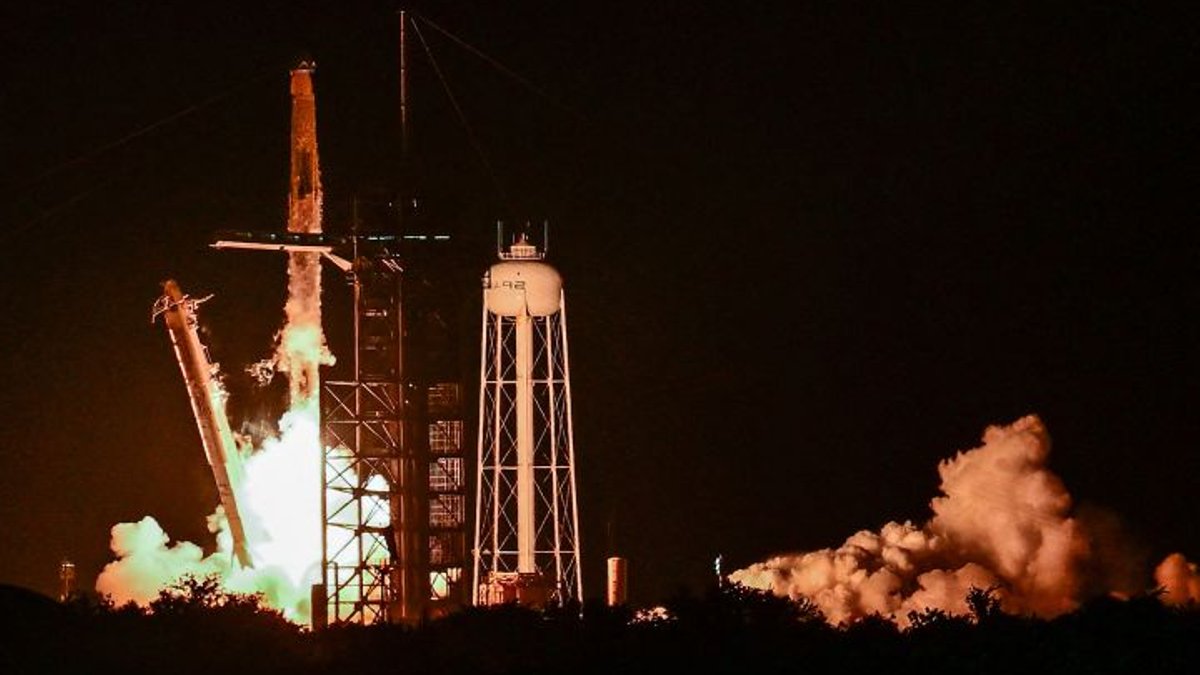
Elon Musk is working on a plan to put AI in orbit, which could solve the difficulties of building AI data centers on earth. His recent merger of SpaceX with xAI could help make this plan a reality.
Musk believes that moving AI data centers to space is the best solution, given the huge demand for power and water that these centers require. They require a lot of resources, which can be challenging to provide on earth.
“The only logical solution…is to transport these resource-intensive efforts to a location with vast power and space,” Musk said when announcing the merger. The merger is expected to help make this plan a reality.
Google, OpenAI, and others are also exploring the possibility of creating data centers in space. They are looking into the feasibility of launching satellites with data centers on board.
David Bader, a distinguished professor of data science at the New Jersey Institute of Technology, agrees that space could be a viable solution. “We are tending to exceed the ability to generate the power (needed),” he said. The power demands of data centers are becoming a significant challenge.
Space offers several advantages, including better access to solar energy and a cooler environment that reduces the need for land and water. This makes it an attractive option for companies looking to reduce their environmental impact.
Related: Weather proof your home from extreme damage
A research analyst note from the outlet last month noted that while there are technical challenges to making orbital AI data centers a reality, these are engineering constraints rather than physical limitations. The note highlighted the potential benefits of orbital data centers.
Google has already announced plans to test orbital AI data centers by launching two test satellites as early as next year. The company believes that this could be a game-changer for the industry.
“In the right orbit, a solar panel can be up to eight times more productive than on earth, and produce power nearly continuously,” Google said in a statement. This makes orbital data centers a more viable option for companies looking to reduce their energy costs.
Sam Altman, CEO of OpenAI, considered buying a rocket company last summer to put data centers in orbit, according to the report. The company is looking into various options for reducing its energy costs.
Starcloud, a Washington-based AI start-up, launched a test satellite with an AI server aboard a SpaceX rocket in November. The company believes that orbital data centers are the future of the industry.
“In space, you get almost unlimited, low-cost renewable energy,” said Philip Johnston, cofounder and CEO of Starcloud. This makes it an attractive option for companies looking to reduce their environmental impact.
Related: Critical Concern in Today’s Digital Age: Cybersecurity Problems and Solutions
Johnston predicts that within 10 years, all new AI data centers will be in orbit, which could help solve the growing backlash to AI data center construction on earth. The cost of providing data centers with electricity is driving up electric bills for consumers.
The cost of providing data centers with electricity is driving up electric bills for consumers, with some areas seeing increases of as much as 267% compared to five years ago. Bader said that a hard number for the increased electrical cost to consumers is tough to determine due to the lack of public information on data center usage.
Data centers can also create water shortages for neighboring communities, with a large data center using up to 5 million gallons of water per day. According to the Environmental and Energy Study Institute, this is equivalent to the water use of a town of 10,000 to 50,000 people.
Mark Muro, a senior fellow at Brookings Metro, said that the earth is becoming a complicated place for Big Tech’s data center development, with political backlash making it harder to get approvals for new construction. They need to find new ways to deliver the needed gigawatt power.
Musk predicts that orbital data centers will be more cost-effective than earth-bound ones within two to three years, but experts disagree, with the outlet estimating that it will be well into the 2030s before orbital data centers reach close to parity. Bader said that while two or three years may be a stretch, he believes that within three to five years, it will be a regular deployment for AI data centers to process in space.
The cost of launching satellites to space is coming down, just as the costs of building and operating AI data centers on earth are rising, making orbital data centers a more viable option. This trend is expected to continue, making orbital data centers an attractive option for companies in the future.





Leave a Reply